Ask anyone to name a JDM legend and the Mk4 Supra is on the shortlist — usually right after the Skyline GT-R. But the Supra’s fame rests on something slightly different from the GT-R’s racing dominance: an engine. The 2JZ-GTE is one of the most over-engineered motors ever fitted to a production car, built so far beyond its factory output that it became the foundation of global tuning culture. This is the story of the A80 Supra, the engine that made it immortal, and what to know if you want to import one.
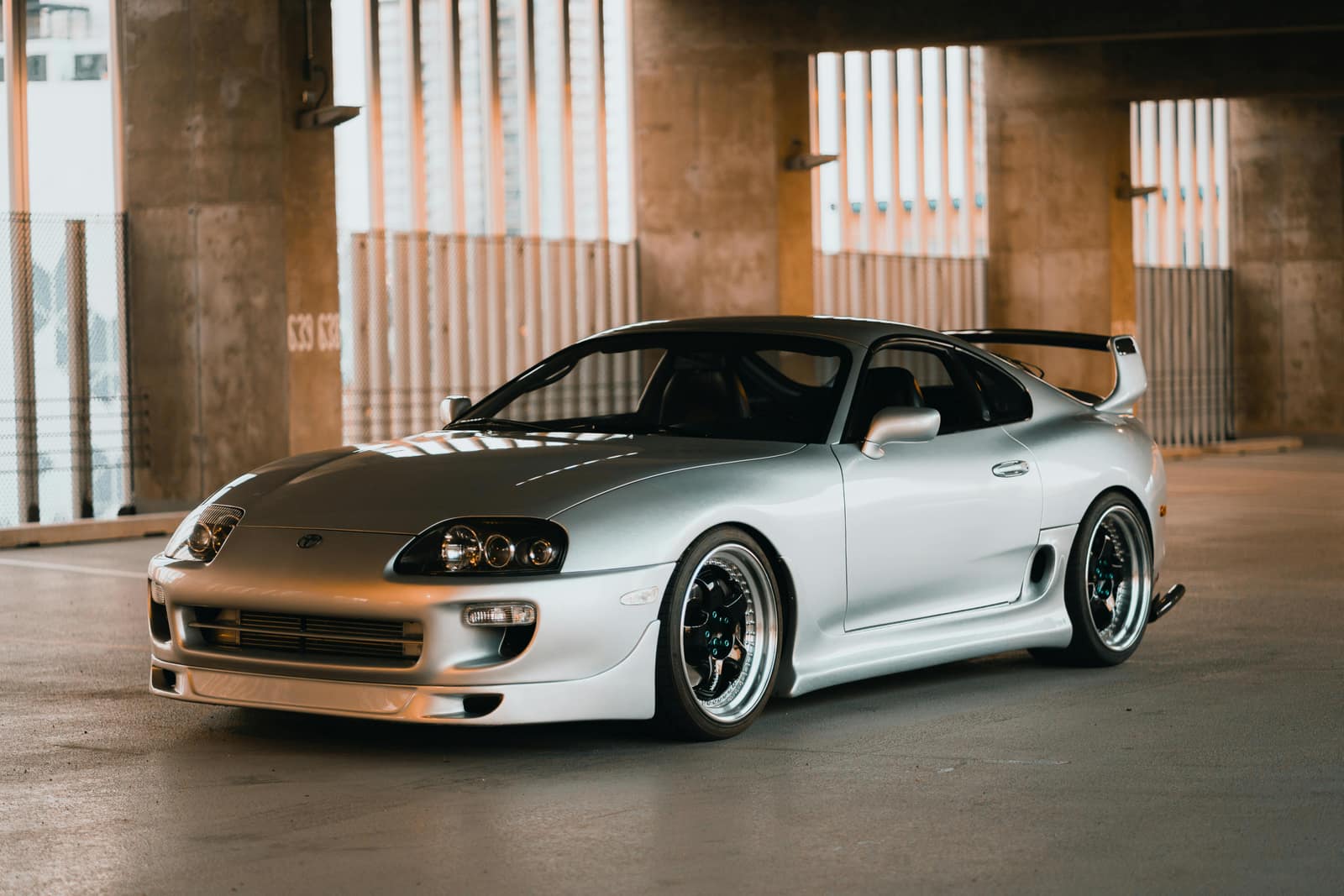 ## The A80, at a glance
The fourth-generation Supra — chassis code A80 (or JZA80) — was produced from 1993 to 2002. It was unveiled at the 1993 Chicago Motor Show after a four-year development under chief engineer Isao Tsuzuki, who had also worked on the Celica and MR2. It was a complete departure from the angular 1980s Supra: smooth, curvy, wide-stanced, with a driver-focused cockpit that curved toward the wheel.
- Years 1993–2002
- Chassis A80 (JZA80)
- Engine 2JZ-GTE — 3.0L twin-turbo inline-six
- Power 320 hp (US) · 280 PS (JDM gentleman's figure)
- Gearbox Getrag V160 6-speed manual (preferred) · 4-speed auto
- Drive Rear-wheel drive
- Weight bal. ≈50/50 — aluminum/magnesium/plastics save ~200 lb vs A70
- 0–60 mph ~4.6 seconds
- Tuning ceiling Stock bottom end reliably handles 700+ hp
The 2JZ-GTE: the heart of the legend
What separates the Supra from its rivals is the engine. The A80 introduced the 2JZ-GTE: a 3.0-liter, twin-turbocharged inline-six. In factory trim it made 280 PS in Japan (the gentleman’s-agreement figure) and 320 hp in US and Canadian cars, which used sequential turbos and larger injectors. Strong numbers for the era — but not what made it legendary.
What made it legendary is what it could take. The 2JZ-GTE has a cast-iron block and forged internals, and Toyota over-built it to a degree that’s almost absurd: the stock bottom end can reliably handle 700 horsepower and beyond with its internal components intact — more than double its factory output. Few production engines in history can make that claim. Tuners discovered they could extract enormous power with basic modifications and without cracking open the engine, and heavily-built examples have reached four-figure horsepower.
That combination — Toyota reliability plus a near-limitless power ceiling — is exactly why the 2JZ became the heart and soul of import tuning culture. The Supra wasn’t just fast; it was a blank cheque for anyone who wanted to chase big numbers.
Motorsport and the silver screen
The Mk4 backed up its engine with the most successful motorsport record of any Supra: it ran at Le Mans two years running, charged up Pikes Peak, raced in American SCCA, and was a dominant force in the All-Japan GT Championship (JGTC) from 1995 all the way to 2003.
But its cultural fame came from somewhere else entirely: a bright orange 1994 Supra in the original The Fast and the Furious (2001). That single on-screen moment cemented the Supra in the minds of a generation who’d never see a JGTC race — and helped drive the demand that’s made clean examples so valuable today.
Why values have soared
The Mk4 Supra has gone from used sports car to genuine collector’s asset. The reasons stack up: limited supply (production ended in 2002), enormous cultural demand (the films, the games, the tuning legend), and the irreplaceable 2JZ. Pristine, original, manual twin-turbo cars are the prize — and they command the strongest premiums by far, with the best examples selling well into six figures. As with most collectibles, originality, the V160 6-speed manual, mileage, and a clean accident history are what separate a strong car from an ordinary one.
What to know about importing a Supra Mk4 in 2026
The A80 (1993–2002) is squarely in the import window: the earliest cars are well past 25 years old, and later builds become eligible by month through the late 2020s. A few things specific to the Supra:
- Confirm the build month for later cars. Early A80s (1993–2000 builds) are eligible now. A 2001–2002 build follows the month-of-manufacture rule — verify the exact date before buying. (See the 25-year rule explained.)
- Originality is everything to value. Because the 2JZ is so tunable, many Supras have been heavily modified. A modified car can be great to own but is worth far less than an original, numbers-matching example — and modifications can complicate import/registration. Read the auction sheet carefully for evidence of accident repair and engine work.
- The 6-speed manual is the one to want. The V160 6MT twin-turbo is the market benchmark and the most liquid; automatics are worth considerably less.
- It’s a 25-year classic, so it pays only 2.5% duty — exempt from the 2025 modern-vehicle tariff. (See the 2025 tariff guide.)
- Run the full landed cost before you bid — clean Supras are expensive, and shipping a high-value car warrants container, not RoRo. Use the Landed Cost Calculator.
Frequently asked questions
Is the Toyota Supra Mk4 legal to import to the US?
Yes — the A80 Supra (1993–2002) falls within the 25-year import window. Cars built 1993–2000 are eligible now; 2001–2002 builds become eligible by their month of manufacture. Always confirm the exact build date.
What makes the 2JZ-GTE engine so special?
It’s extraordinarily over-engineered. The 3.0L twin-turbo inline-six made 320 hp from the factory (US spec) but its cast-iron block and forged internals can reliably handle 700+ hp with the stock bottom end — more than double its rated output. That tuning headroom plus Toyota reliability made it a legend.
How much horsepower does a stock Supra Mk4 have?
The twin-turbo 2JZ-GTE made 320 hp in US/Canada cars and 280 PS in Japan (the gentleman’s-agreement figure). The naturally aspirated 2JZ-GE made 220 hp.
Why is the Mk4 Supra so expensive now?
Limited supply (production ended 2002), huge cultural demand from films and tuning culture, and the legendary 2JZ engine. Original, low-mileage, manual twin-turbo cars command the strongest prices — the best reaching six figures.
What should I look for when importing one?
Originality above all (the 2JZ’s tunability means many are modified), the V160 6-speed manual over the automatic, low mileage, and a clean accident history. Read the auction sheet closely and confirm the build month for import eligibility.
A legend built on an engine
The Mk4 Supra earned its place differently from the GT-R — not through racing dominance but through an engine so over-built it rewrote tuning culture. That’s why, decades on, the A80 and its 2JZ remain among the most coveted JDM cars in the world. If one’s your goal, confirm eligibility with the 25-year rule guide, see the other JDM legends eligible to import, and price your car in the Landed Cost Calculator.
Sources
- Toyota UK Magazine — History of the Toyota Supra (A80 development, motorsport)
- JDMBUYSELL — 2026 Toyota Supra A80 Buyer’s Guide (specs, trims, values)
- TopSpeed / Supercars.net — Supra Mk4 (A80) specifications and 2JZ-GTE output
- Public record of the A80 in The Fast and the Furious (1994 model)
WATTSHIP intelligence is for reference and estimation. Eligibility is by month of manufacture and must be verified per vehicle; this is not legal advice. See our Disclaimer.