In the late 1980s, supercars were magnificent and miserable. A Ferrari of the era was fast and beautiful but overheated in traffic, was nearly impossible to park, and demanded cambelt services that cost as much as a small car. Then Honda — a company known for sensible Civics — built a mid-engine supercar that could run with the Italians on a circuit and still start every single morning, drive to work without complaint, and never break your heart. The NSX didn’t just join the supercar club; it embarrassed it. And it did so with a Formula 1 legend’s fingerprints all over the chassis.
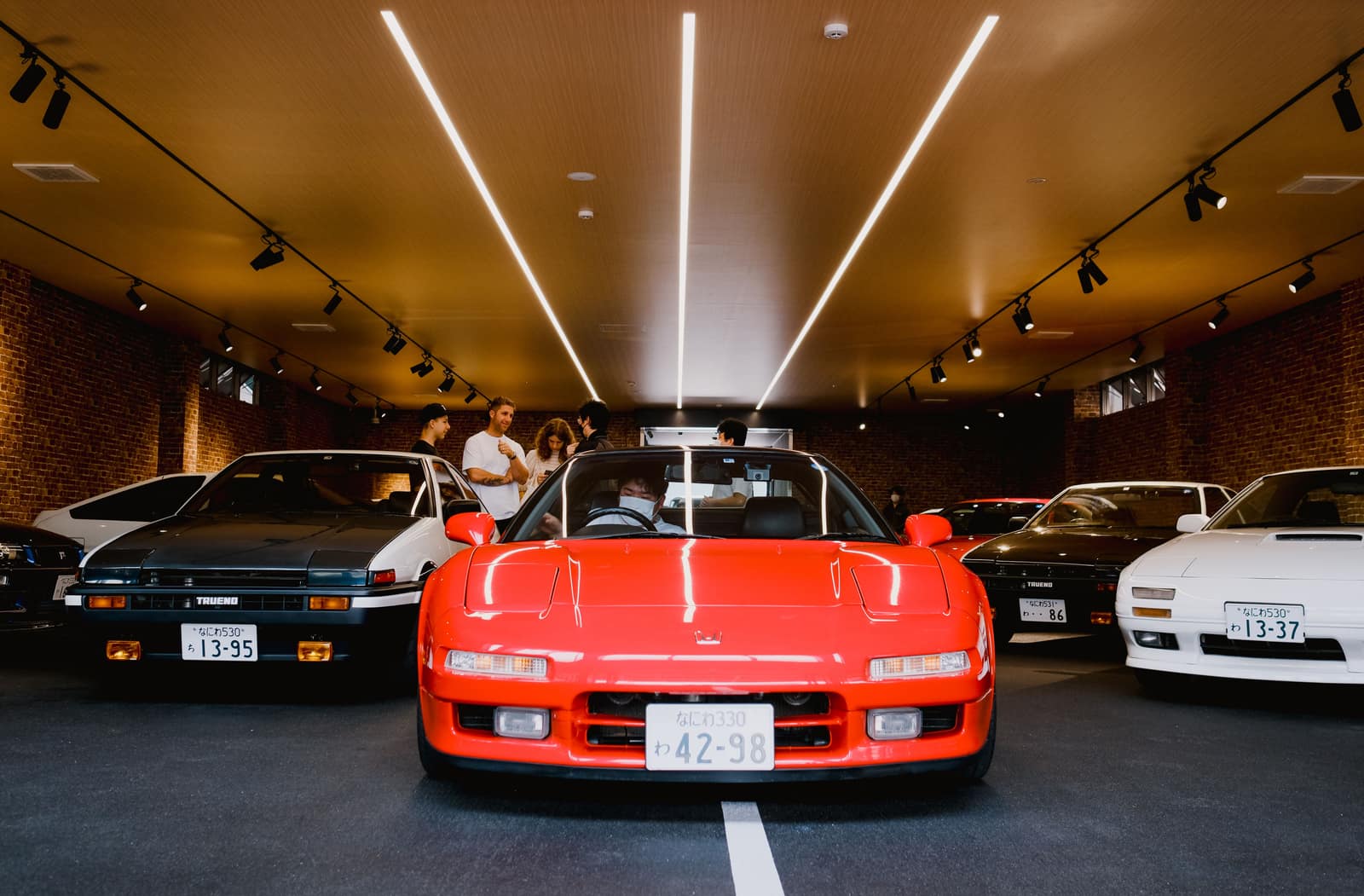 ## The NA1, at a glance
The original NSX — chassis code NA1 — was built from 1990 to 1997 (the later NA2, with a 3.2-liter engine and six-speed, ran 1997–2005). Unveiled at the 1989 Chicago Auto Show, it was a genuine engineering landmark: the world’s first mass-production car with an all-aluminum monocoque chassis and body, shaving roughly 200 kg versus an equivalent steel structure while improving rigidity.
- Years 1990–1997 (NA1) · 1997–2005 (NA2, 3.2L)
- Chassis NA1 / NA2
- Engine C30A — 3.0L VTEC V6 (first V6 with VTEC)
- Power 270 PS
- Redline 8,000 rpm (titanium connecting rods — production first)
- Body All-aluminum monocoque — world's first in mass production
- Drive Mid-engine, rear-wheel drive
- Suspension Double wishbone at all four corners
- Chassis tuned Stiffened on Ayrton Senna's Suzuka feedback (1989)
The Senna connection
The most famous part of the NSX’s development is the involvement of Ayrton Senna. The three-time Formula 1 World Champion — who raced for Honda-powered teams — tested the NSX prototype at Honda’s Suzuka Circuit in 1989 and gave critical feedback, most importantly pushing Honda to stiffen the chassis further than the prototype. The production car was sharper for it. Senna’s verdict on the car is part of NSX legend: he said he was impressed, and that he could drive it every day.
That phrase — drive it every day — captures the entire point of the NSX. It was a supercar designed around usability and reliability, not in spite of them.
Why it mattered (and still does)
The NSX’s significance goes beyond its own sales. It proved a supercar didn’t have to be temperamental — that you could have exotic performance and Honda dependability. That idea rippled through the whole industry; the Italian marques could no longer sell unreliability as the price of exclusivity. The NSX is, in a real sense, why modern supercars are usable.
For owners, that legacy is the appeal: the NSX delivers a pure, analog, mid-engine driving experience — balance and connection over brute horsepower — with build quality that means many survive in excellent condition with few major issues. It’s the rare exotic you can actually live with.
Values and what to look for
NSX values have climbed steadily as collectors recognize what it is. A good-condition NA1 averages in the mid-five-figures, the later NA2 (3.2L, six-speed) commands more, and the lightweight Type R variants occupy a different stratosphere entirely — the rarest reaching several hundred thousand dollars at auction. Because the NSX was so well-built and usable, the cars that survive are often in genuinely good shape — but originality, mileage, full service history, and the manual gearbox drive value, as always.
What to know about importing an NSX in 2026
- Eligibility: the NA1 (1990–1997) is largely within the import window now — early-1990s cars are well past 25 years, and later NA1 builds become eligible by month. Confirm the build month for cars near the line. (See the 25-year rule explained.)
- Originality and history matter most. The NSX’s value rests on condition and provenance — prioritize documented, original, well-serviced cars; favor the manual.
- Aluminum body = specialist repair. The all-aluminum construction is wonderful but means accident repair requires aluminum-competent shops. Read the auction sheet carefully for prior damage.
- 25-year classic — 2.5% duty, exempt from the 2025 modern-vehicle tariff. (See the tariff guide.)
- Run the landed cost and ship a high-value NSX in a container. Use the Landed Cost Calculator.
Frequently asked questions
Is the Honda NSX legal to import to the US?
The NA1 NSX (1990–1997) is largely within the 25-year window — early-1990s cars are eligible now, with later builds qualifying by month of manufacture. (US-market Acura NSX cars were sold here originally.) Confirm the build month for cars near the line.
Did Ayrton Senna really help develop the NSX?
Yes. Senna tested the prototype at Suzuka in 1989 and gave critical feedback, notably convincing Honda to stiffen the chassis further than the prototype — making the production car sharper. He famously said he could drive it every day.
What makes the NSX special?
It was the world’s first mass-production car with an all-aluminum monocoque, powered by the first VTEC V6 (270 PS, 8,000 rpm redline, titanium con-rods), with a Senna-tuned chassis — delivering Ferrari-rivaling performance with Honda reliability. It proved a supercar could be an everyday car.
How much does a Honda NSX cost now?
A good-condition NA1 averages in the mid-five-figures; the later NA2 (3.2L, six-speed) commands more; rare lightweight Type R variants have reached several hundred thousand dollars at auction.
What should I look for when importing one?
Originality, low mileage, full service history, and the manual gearbox. Check for prior accident damage (aluminum repair needs specialist shops), and confirm the build month for import eligibility.
The supercar that played by new rules
The NSX is the legend that changed the definition rather than chasing it — proof that exotic performance and everyday reliability could live in one car, with a Formula 1 champion’s input baked into the chassis. That’s why it endures. If the everyday supercar is your goal, confirm eligibility in the 25-year rule guide, see the 2026 JDM legends list, and price it in the Landed Cost Calculator.
Sources
- Project JDM — Honda NSX NA1/NA2 complete history & specs (C30A, Senna, titanium con-rods)
- netcarshow — 1990 Honda NSX information & specs (Senna/Suzuka chassis development)
- HotCars — the Japanese supercar that made Ferrari change strategy (values)
- OverTake — the Honda NSX, Senna’s stamp (all-aluminum first)
WATTSHIP intelligence is for reference and estimation. Eligibility is by month of manufacture and must be verified per vehicle; this is not legal advice. See our Disclaimer.