Once you’ve won your car at auction, one decision shapes both your budget and your peace of mind: how to ship it across the Pacific. There are two main methods — RoRo (roll-on/roll-off) and container — and they’re a genuine trade-off, not a case of one being simply better. RoRo is cheaper and the most common choice; container costs more but protects the car far better. Which is right depends entirely on what you’re shipping and what you’re willing to risk. Here’s how to decide.
 ## How each method works
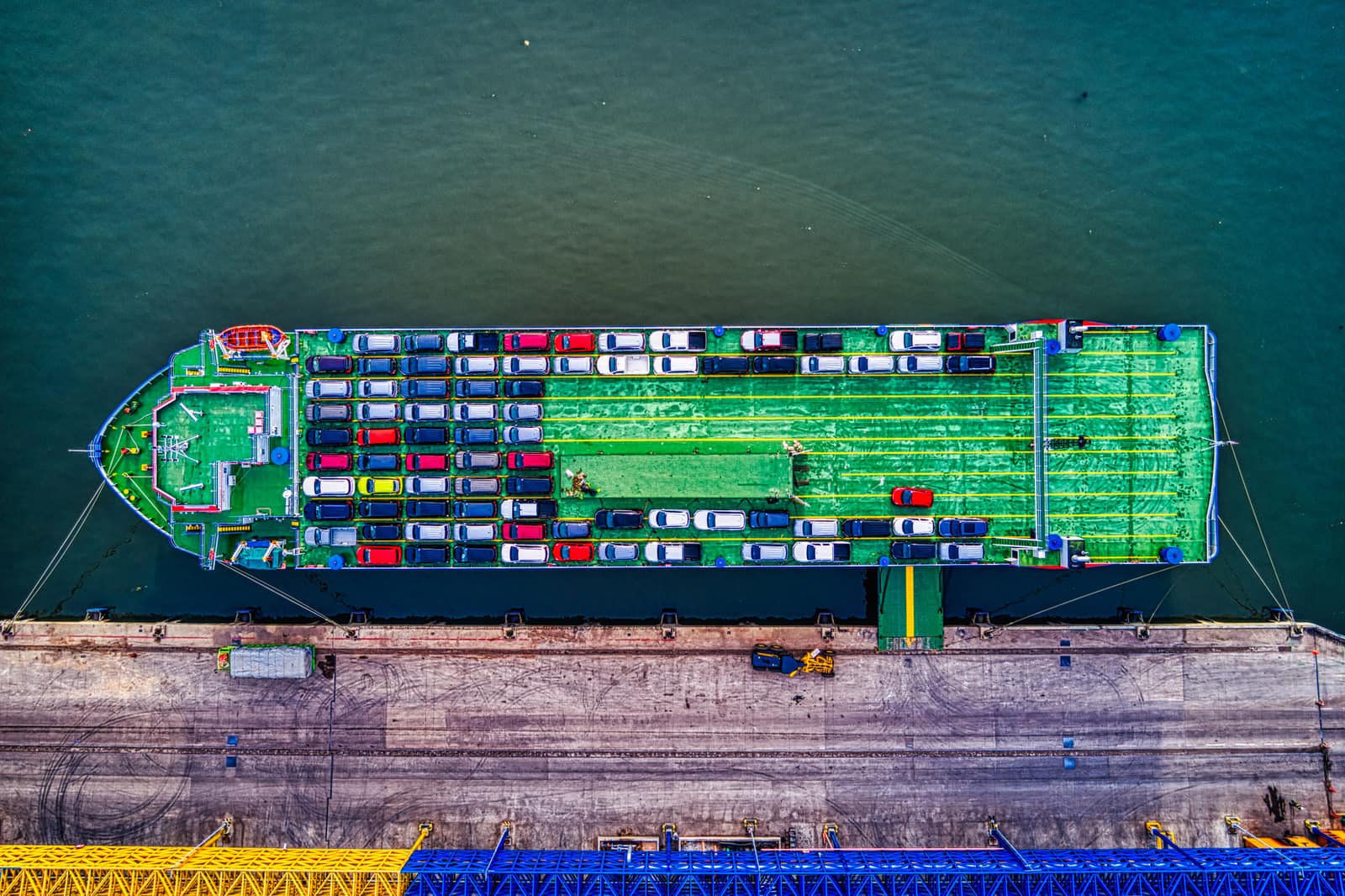
RoRo (Roll-on/Roll-off) works like a ferry for vehicles. Cars are driven directly onto the vessel, secured in an open deck bay, and driven off at the destination. It’s the most widely used method for shipping JDM cars, mainly because it’s straightforward and cost-effective.
Container shipping loads the car into a steel shipping container (which is then loaded onto the ship), secured with tie-down straps and wheel chocks. You can ship one car in a dedicated container, or share a container (often up to four cars splitting the cost).
The head-to-head
| Container | RoRo | |
|---|---|---|
| Cost | Higher — container + destuffing fee on top | Cheaper — most common method |
| Protection | Sealed inside container — weather, port handling, theft all blocked | Open deck — exposed; driven on/off by yard staff |
| Extra items | Spare wheels, body kits, parts (sometimes household goods) | No personal belongings allowed in the car |
| Car condition | Can be non-running — loaded as cargo | Must run & drive — loaded under its own power |
| Schedule | Shared container can wait until full | Reliable, frequent departures |
| Best for | Valuable · rare · modified · non-running cars | Common, running, budget imports |
Cost. RoRo is typically the cheaper method, full stop — there’s no container to pay for and no “destuffing” (unloading) fee, which alone can add a few hundred dollars to container shipping. For a budget-conscious import of a common car, RoRo saves real money.
Protection. This is container’s big advantage. The car is sealed inside a container for the whole journey — protected from weather, port handling, vandalism, and theft. RoRo cars sit on an open deck and are handled (driven on and off) by yard staff, which carries more risk of door dings, careless driving, and items going missing. For a valuable or pristine car, that protection is worth paying for.
What you can ship. Container lets you include extra items with the car — spare wheels, a body kit, parts, even household goods in some cases. RoRo generally does not allow personal belongings in the car. If your car comes with extras, container is the practical choice.
Car condition. RoRo requires the car to be running and drivable (it has to be driven on and off). A non-running project car must go by container.
Schedule. RoRo often has more reliable, frequent departures — the car rolls onto the next sailing. A shared container may wait until it’s full before departing, which can add time (though for a planned import the difference is often smaller than it sounds).
Which should you choose?
A simple way to decide:
Choose RoRo if: the car is a common, budget-minded import; it runs and drives; you have no extra parts to ship; and you want the cheapest, most reliably-scheduled option. RoRo is the sensible default for a straightforward, lower-value car.
Choose container if: the car is valuable, rare, pristine, or heavily modified; it’s non-running; you want maximum protection from handling and theft; or you have parts/extras to ship with it. For a JDM legend — a Supra, a Skyline GT-R, a clean S15 — the extra cost of container is cheap insurance against arriving with damage. A shared container is a middle path: closer to RoRo cost while keeping container’s security.
The rule of thumb most experienced importers use: the more the car is worth, the more container makes sense. On a $40,000 collectible, the few hundred dollars saved by RoRo isn’t worth the risk of open-deck handling.
Factor it into your landed cost
Whichever you choose, the shipping method is one line in your total landed cost — and the difference between RoRo and container can be several hundred dollars, enough to matter when you’re setting a maximum bid. Run both scenarios for your specific car and route in the Landed Cost Calculator so you’re budgeting the real number. (See the full cost-to-import breakdown.)
Frequently asked questions
Is RoRo or container cheaper for shipping a car from Japan?
RoRo is typically cheaper — there’s no container cost and no destuffing fee. Container shipping costs more but offers better protection. A shared container (multiple cars splitting one) sits between the two on cost.
Is container shipping safer than RoRo?
Yes. The car is sealed inside a container for the whole journey, protected from weather, port handling, vandalism, and theft. RoRo cars sit on an open deck and are driven on and off by yard staff, carrying more risk of minor damage or theft of items.
Can I ship parts or belongings with my car?
With container, yes — you can include spare wheels, body kits, parts, and sometimes household goods. RoRo generally does not allow personal belongings in the car.
Does my car need to run to be shipped?
For RoRo, yes — it must be running and drivable to be driven on and off the vessel. A non-running car must go by container.
Which should I use for a valuable JDM car?
Container (or a shared container). For a valuable, rare, pristine, or modified car, the extra cost is cheap insurance against open-deck handling damage and theft. The higher the car’s value, the more container makes sense.
Match the method to the car
There’s no universally “right” shipping method — only the right one for your car. RoRo for the common, running, budget import; container for the valuable, rare, modified, or non-running one; a shared container when you want a balance. Decide based on what the car is worth to you, then fold the cost into your total. Run both options in the Landed Cost Calculator, and see the full cost breakdown and import process.
Sources
- JDMBUYSELL — RoRo vs container shipping for a JDM car (methods, pros/cons, destuffing fee)
- Ship Overseas — cost difference between RoRo and container (running condition, belongings, schedule)
- SAT Japan / Carused.jp — RoRo vs container for importing used cars (protection, cost)
- SDC International — shared-container option (up to four cars splitting cost)
WATTSHIP intelligence is for reference and estimation. Shipping costs and options vary by carrier, route, and season; confirm with your shipping provider. See our Disclaimer.